Journal
Animal print, the designer's neutral
By Marc Cory · Oct 15th 2026

Ask a designer who has specified a leopard stair runner why it works and the answer is usually the same: it is a neutral. The colors are the colors of a wool carpet anyway, camel and cream and black and the pattern is small, organic and non-directional, which means it hides soil, turns a stair without a seam and goes with everything from a Georgian hall to a glass box. Here is how we spec it and which of the 199 animal styles in the catalog do what.
Antelope, the stair runner's pattern
Antelope is the one you have seen on a hundred good staircases: a small, almost abstract hide pattern, tan on cream with a black outline, woven as a Wilton so the pile is short and locked in. Stanton, Prestige Mills and Bellbridge all weave a version, in wool or a wool-nylon blend and the repeat on most of them is under 24 inches, which is why a runner cut from it can be pieced around a curve with no visible break. On a straight flight it reads calm; on a spiral it reads as if it was always there.
Leopard and cheetah, in the right scale
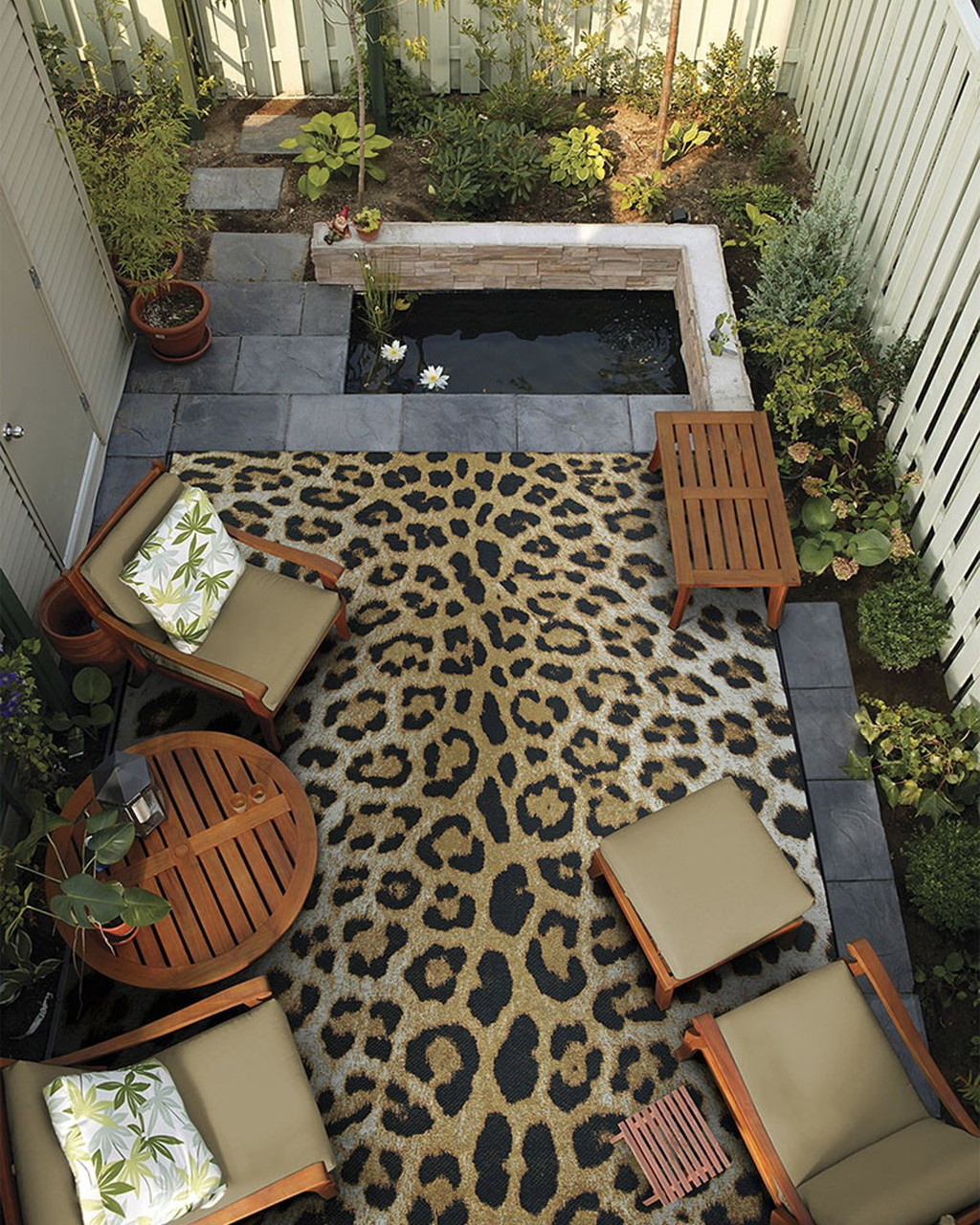
Leopard is bolder than antelope and the scale of the rosette is the whole decision. A small rosette, 2 to 3 inches, works as a hall runner or a bound rug under a dining table; a large rosette, 5 inches and up, is a living room rug or a bedroom, where it has the floor to itself. The mills color it two ways: true to the animal in camel and black, or recolored into a gray, a blue or a tone-on-tone cream, which is how it ends up in a coastal house without anyone calling it leopard.
Zebra and tiger, as rugs
Zebra stripes are directional, so they do not turn a stair; they belong as a bound rug, often with a wide border, where the stripe can run with the room. A zebra under a glass coffee table in a mostly white room is a classic for a reason. Tiger is rarer and usually machine woven in nylon by Couristan; it is the one to use when the client wants the idea of a hide at a hospitality price point.
Real hide
Forty-four of the animal styles in the catalog are actual hide: cowhide from Pampas Leather, stitched into patchwork rugs in squares, herringbones and chevrons and sized rather than patterned. They are the answer when a client wants the texture of a hide without the shape of one and they take a custom size and a border like any bound rug. Pile height is whatever the animal grew.
Where it goes wrong
Two mistakes. The first is scale: a large-rosette leopard on a 27 inch runner shows two rosettes across and looks like a mistake. The second is sheen: animal print in a shiny viscose or a bright nylon reads as costume. Keep it matte, in wool or a wool blend and keep the scale small on anything narrow.
How to spec it
Request the memo and a larger cut; animal print needs to be seen at a full repeat. For a stair, send the tread count and photographs and we will quote the runner, the pad and the install. The animal print collection holds all 199 styles with counts by look and the wool stair runner guide covers the construction questions.